

Infrastructure

Facilities

Benches built in house to reproduce on the ground the conditions a system will face in orbit, magnetic field, solar illumination and relative motion, with an independent measurement of ground truth, and the ground station for operations.

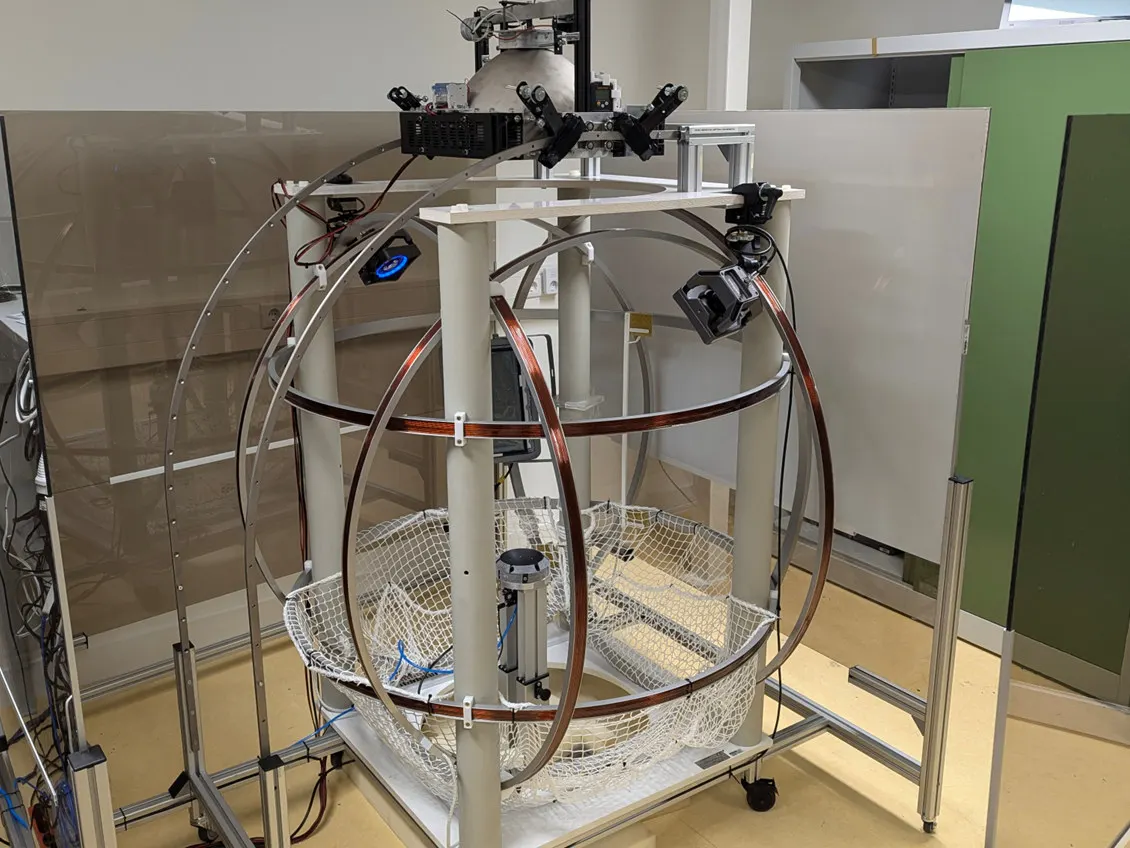
The Helmholtz cage of the CubeDyna facility

CubeDyna

A CubeSat attitude dynamics facility: an air bearing platform inside a Helmholtz cage, with simulated solar illumination and Earth albedo.

The Helmholtz cage generates a controlled magnetic field around the model, so magnetic actuators work as they would in orbit. The platform floats on an air bearing and is free to rotate almost without friction, carrying an inertial unit, reaction wheels, battery and microcontroller, plus an automatic mass balancing system. An independent reference system measures true attitude, a sun simulator and an albedo lamp reproduce the illumination, and a safety structure with a net protects the model. The facility is also used for teaching activities shared with other universities.

Magnetic field
gabbia di Helmholtz triassiale
Platform
cuscino d'aria, 3 assi
Balancing
automatico, masse mobili
Illumination
simulatore solare e lampada albedo
Ground truth
sistema di misura indipendente
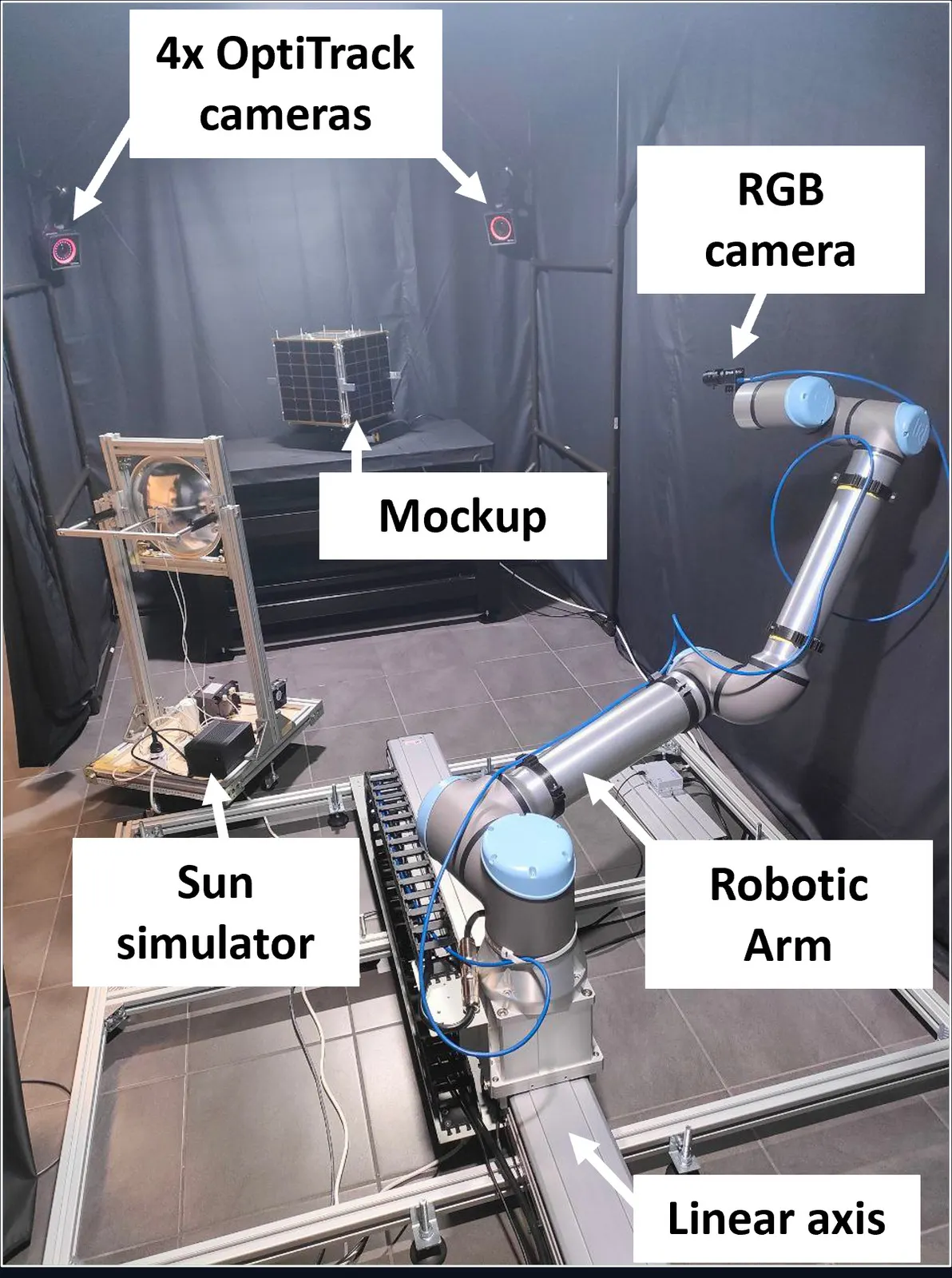
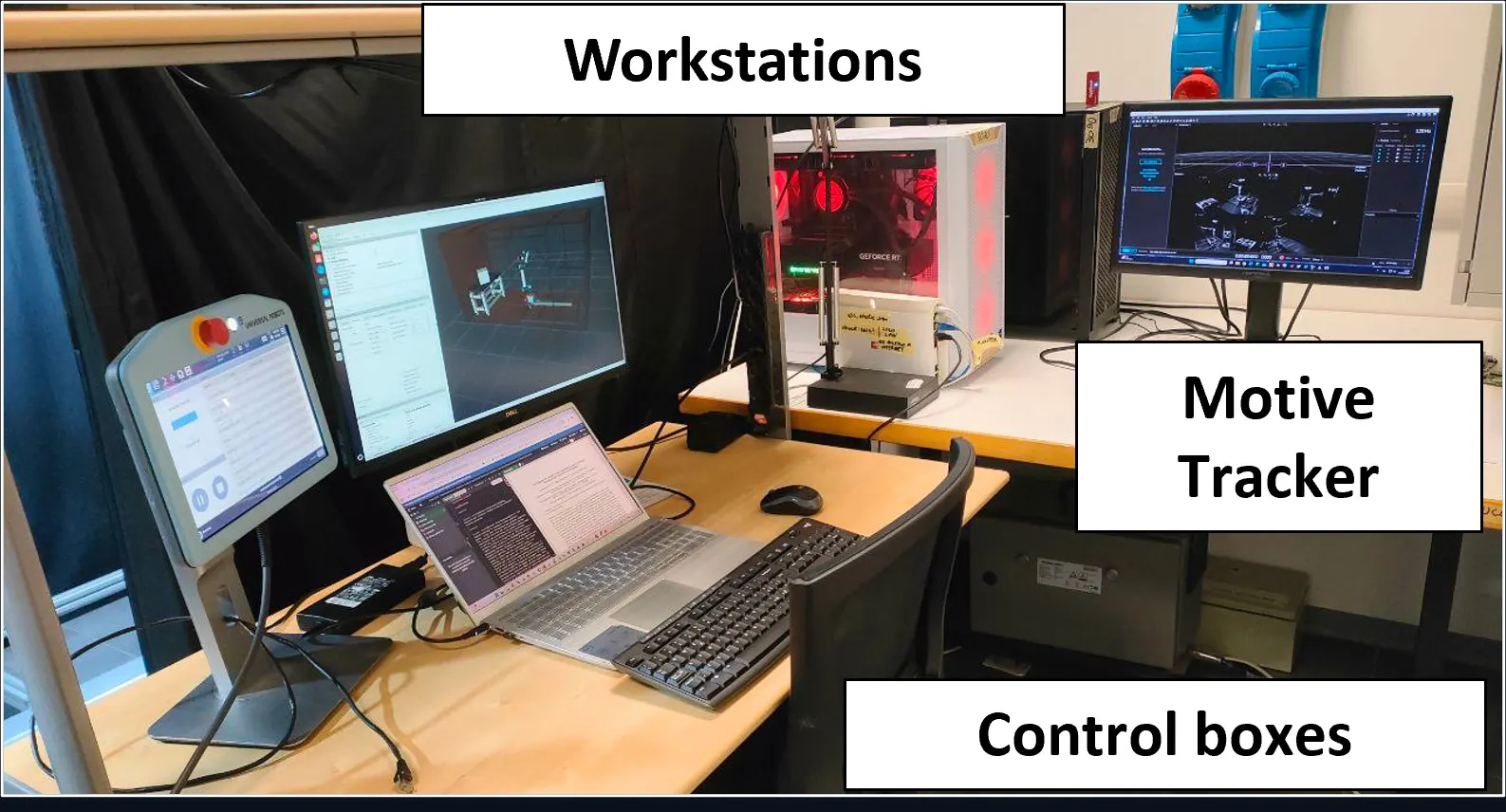
The test area with robotic arm, mockup and sun simulator The control area, with the workstations and the optical tracker

Robotic testbed

Physically reproduces the relative motion between two satellites in proximity, acquiring images in known and repeatable conditions instead of simulating them.

The arm carries either the camera or the satellite mockup inside a 4.4 x 2.0 x 2.2 m dark room, with a sun simulator. Optical tracking provides the true pose to compare the estimate against.

Degrees of freedom
8
Arm
6 assi 1.3 m, corsa 1.8 m
Ground truth
tracciamento ottico a 4 camere
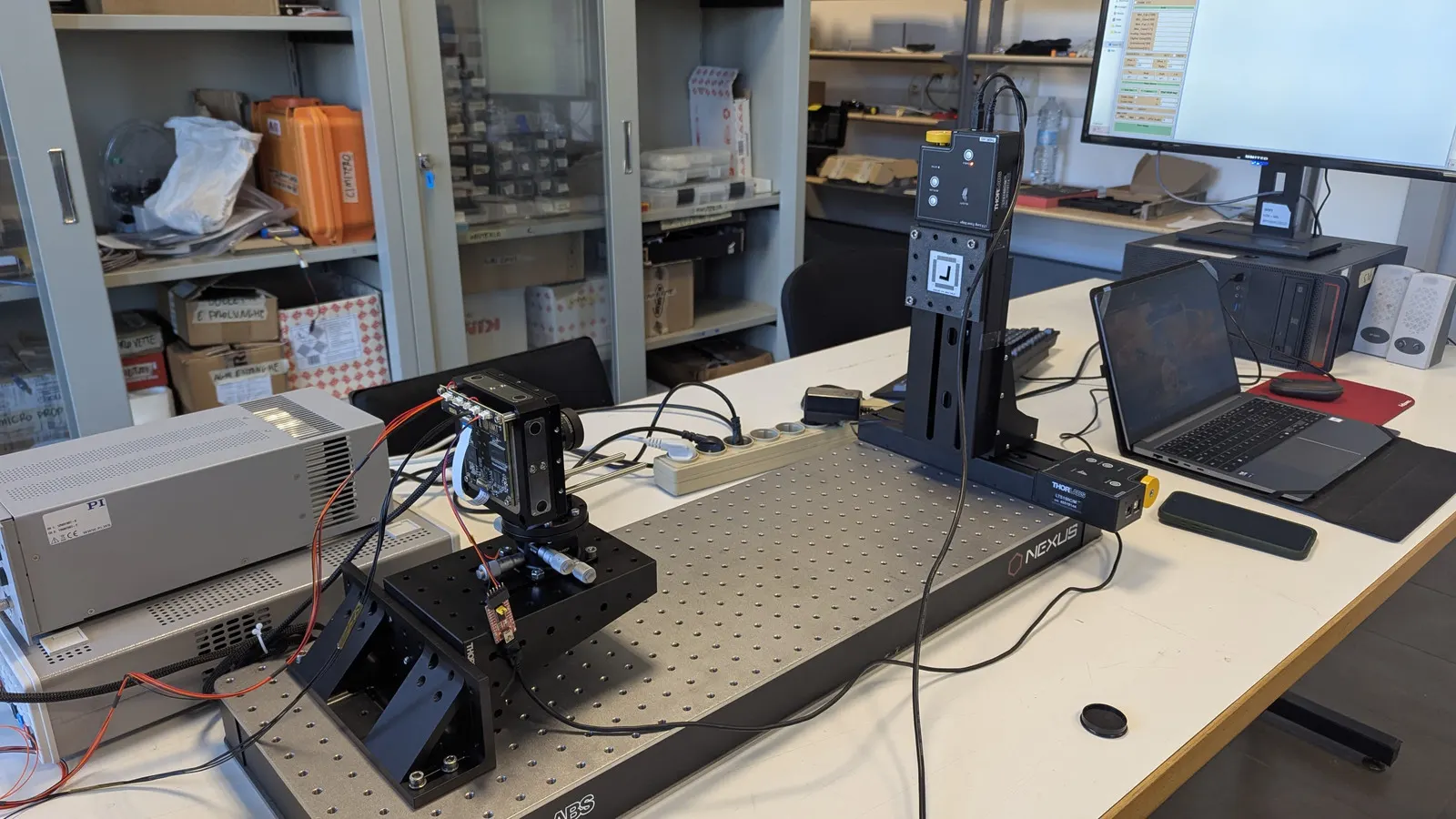
The motion compensation bench in the lab

Image motion compensation

A Forward Motion Compensation prototype: the sensor, not the optics, is translated in antiphase with the apparent motion of the scene.

In very low orbit the scene moves across the sensor during exposure and produces smear, which limits integration time and therefore signal to noise ratio. The bench mounts the sensor on a closed loop biaxial piezo stage and drives it with a sinusoidal profile, acquiring the image during the forward scan half cycle.

Stage travel
100 x 100 µm
Repeatability
10 nm
Tracking error
2.5 - 5 µm RMS a 3 Hz
Integration time gain
fino a 5x
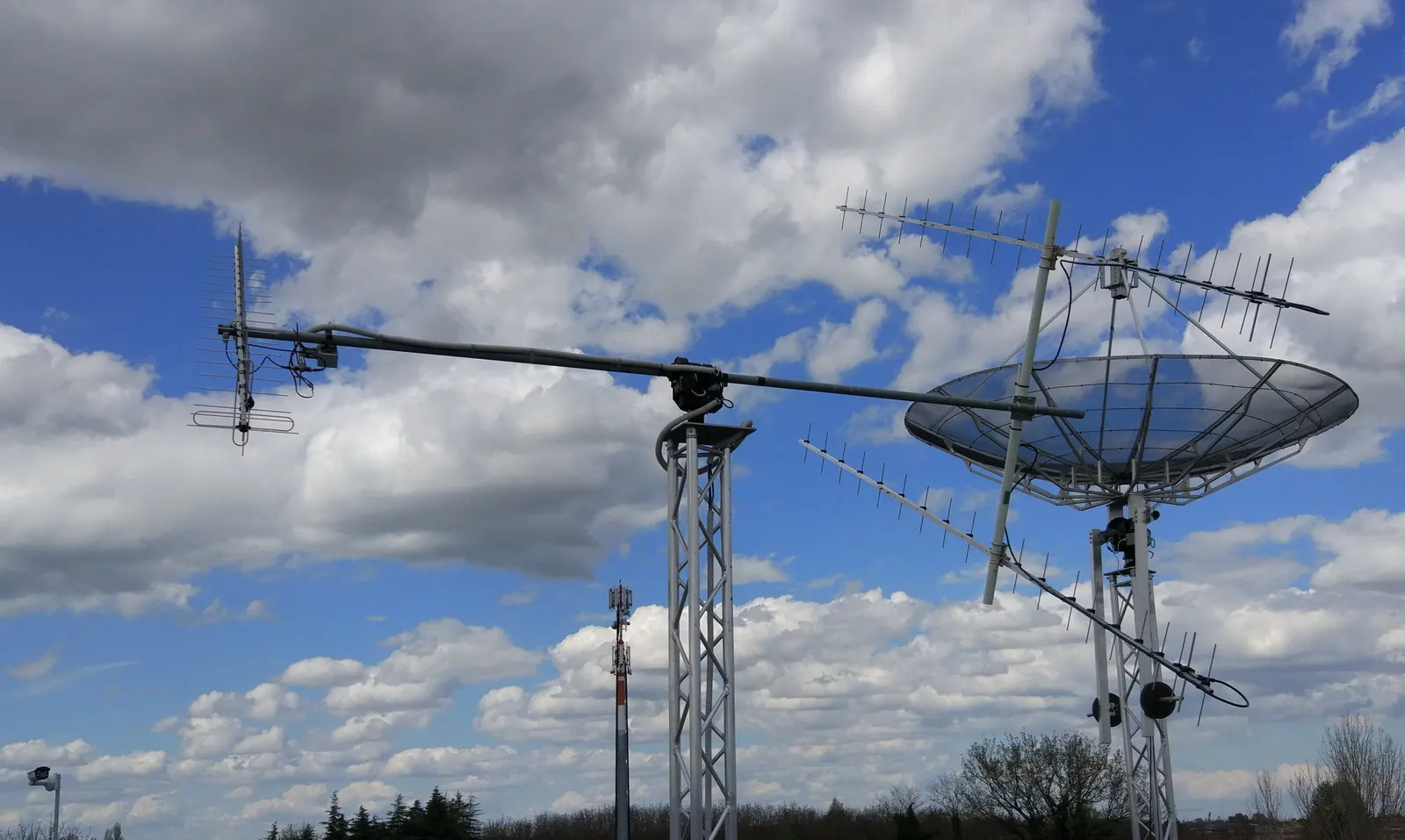
The UHF and S-band antennas on the roof The mission control room

Alma Mater Ground Station

The lab ground station, with a software defined radio transceiver, used for university satellite operations.

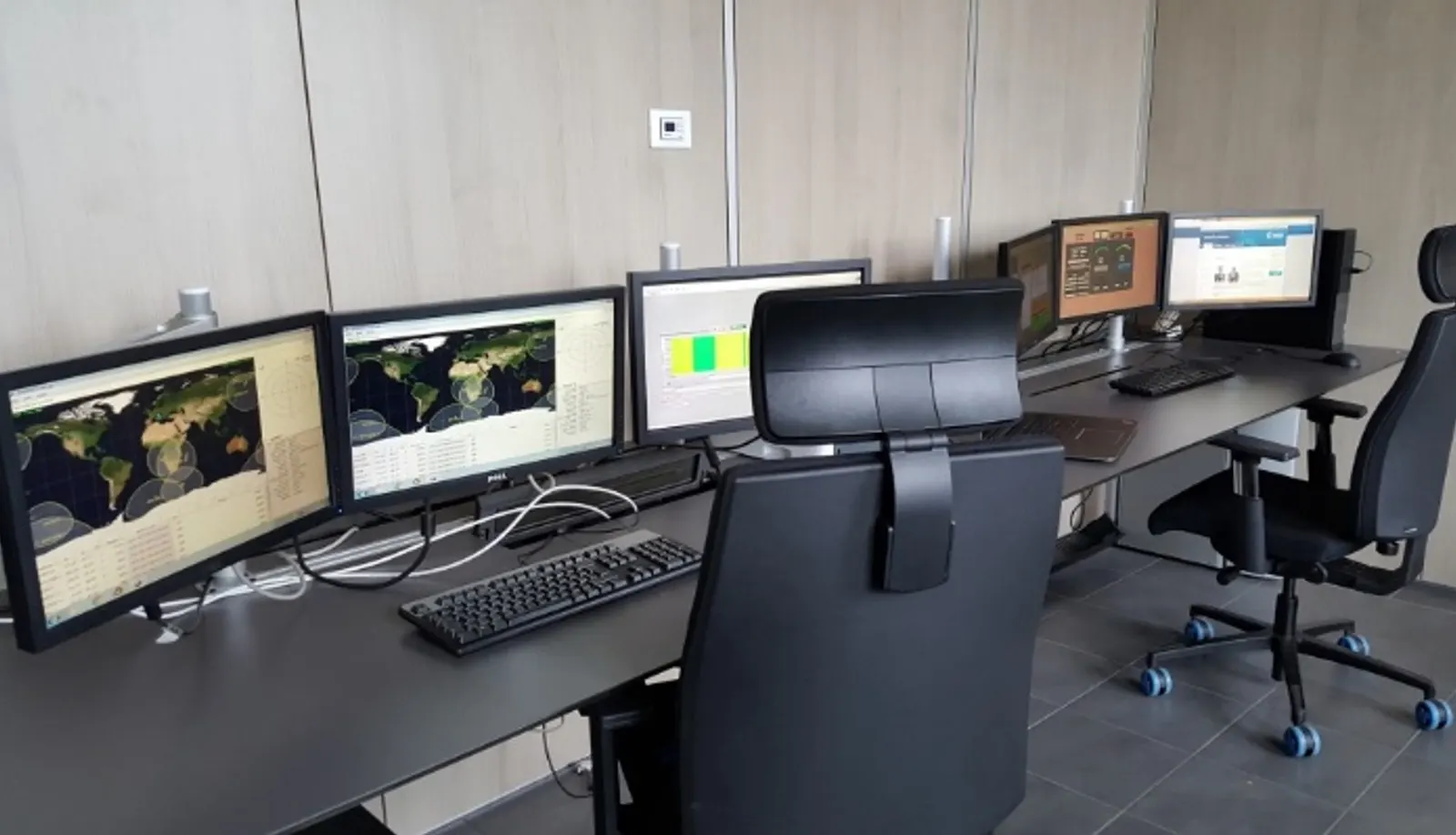
The UHF and S-band antennas sit on the same roof, in Forlì. In S-band a 3 metre mesh dish with a dual mode circular feed serves the downlink: the received signal passes through a cavity filter, a low noise amplifier and finally the software defined radio. The azimuth and elevation rotator points to a tenth of a degree, and the mission control room hosts up to three operators on separate workstations for tracking, radio handling and telecommand and telemetry archiving. Since the chain is software defined, protocol, modulation and frequency are reconfigured without touching the hardware.

Position
44.2005°N 12.0673°E, 32 m
QTH locator
JN64AE
Bands
UHF, S
S-band dish
3 m a rete, F/D 0.45
Gain at 2320 MHz
35.4 dBd
Beamwidth
3.2°
Noise figure
0.5 dB
Rotator
AZ/EL 360/180°, 0.1°
Radio
USRP N210, SBX 0.4-4.4 GHz
Control room
3 postazioni
Missions supported
AlmaSat-1, ESEO