


Vision-based navigation for proximity operations
Monocular navigation for active debris removal and in-orbit servicing, where the relative pose between chaser and target must be known accurately.
Deep learningRendezvousDomain gap
Department of Industrial Engineering, Alma Mater Studiorum - University of Bologna
Since 2004 we have designed microsatellites and the technologies that make them possible: attitude control, autonomous navigation, propulsion, on-board systems and ground stations. And we test them on the ground, on benches we build ourselves, before they fly.
Research
Activities cover autonomous navigation, attitude control, space surveillance and on-board systems for small platforms. Each line is carried through to experimental verification on the lab test benches.
Monocular navigation for active debris removal and in-orbit servicing, where the relative pose between chaser and target must be known accurately.
Accurate and cost-effective solutions to avoid collisions in orbit. Candidate conjunctions are by now too many to be handled manually one by one.
Monitoring, tracking and characterising objects in Earth orbit, with ground based and spaceborne sensors, to predict and avoid collisions.
Pointing accuracy and stability on platforms with limited hardware, verified on the ground before flight.
Facilities
Test benches built in house for the ground verification of attitude, optical navigation and image quality, and a ground station for operations.
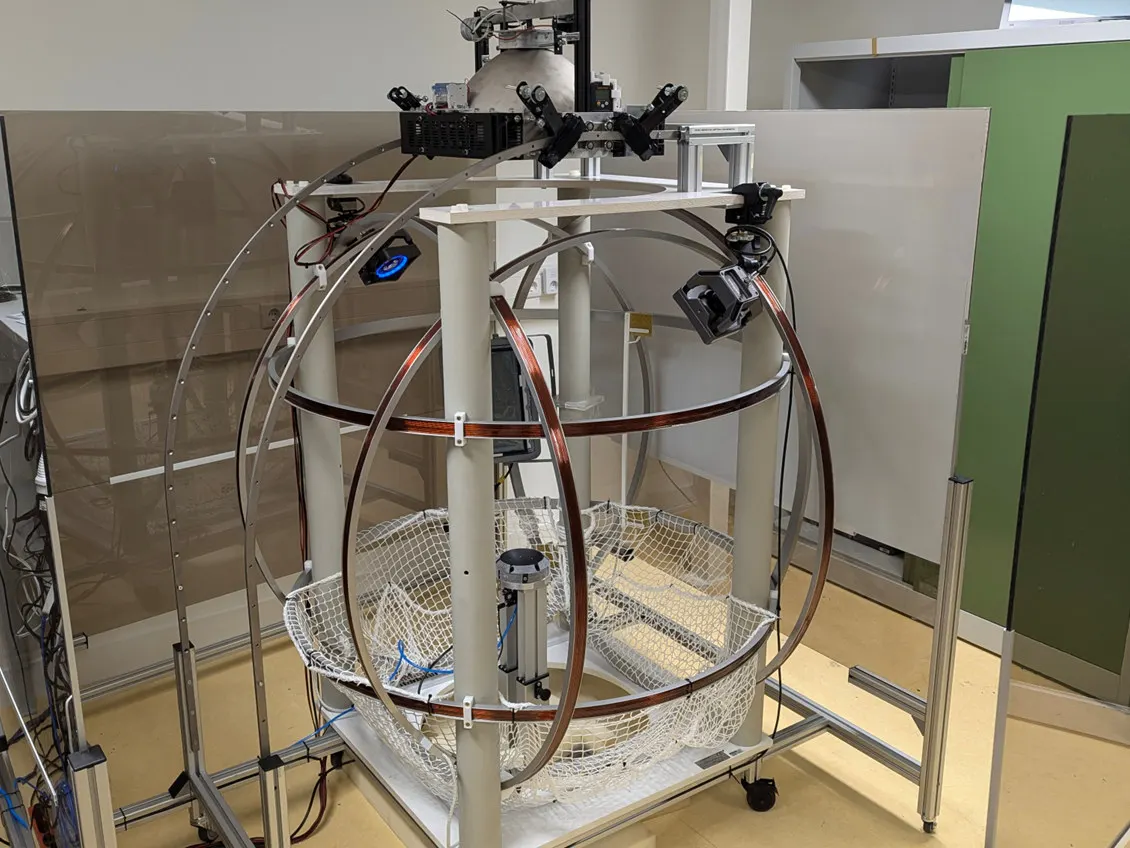
A CubeSat attitude dynamics facility: an air bearing platform inside a Helmholtz cage, with simulated solar illumination and Earth albedo.
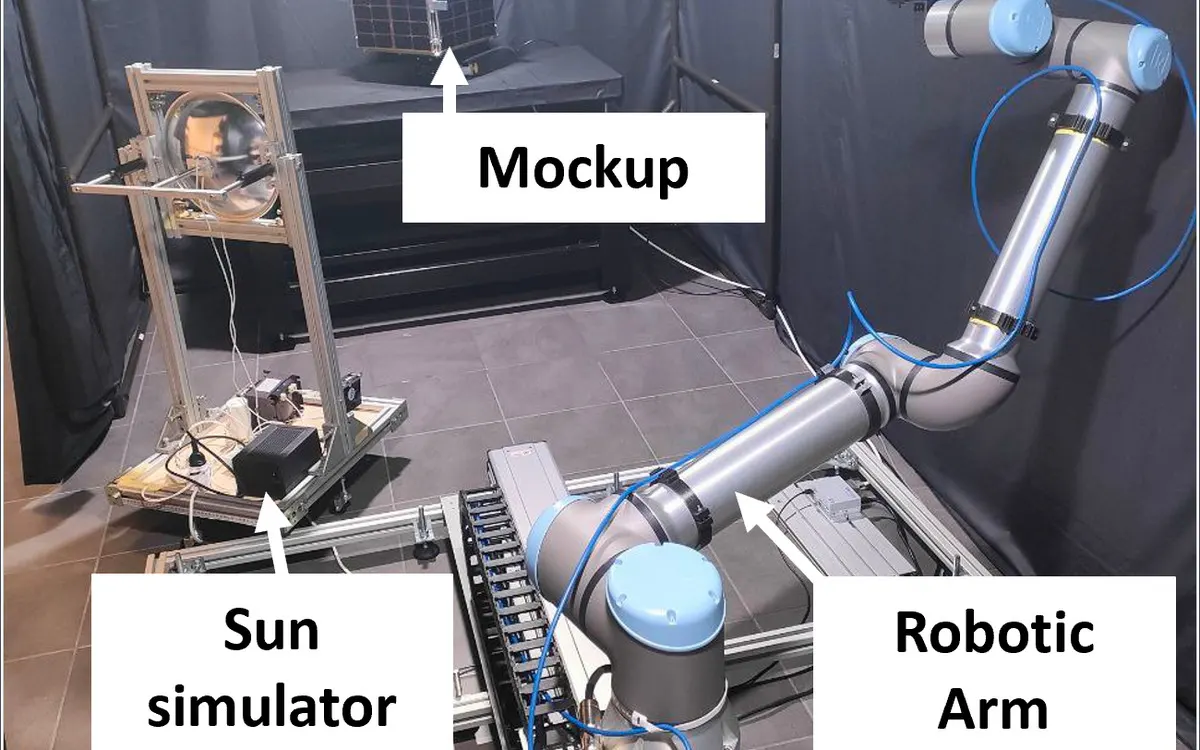
Physically reproduces the relative motion between two satellites in proximity, acquiring images in known and repeatable conditions instead of simulating them.
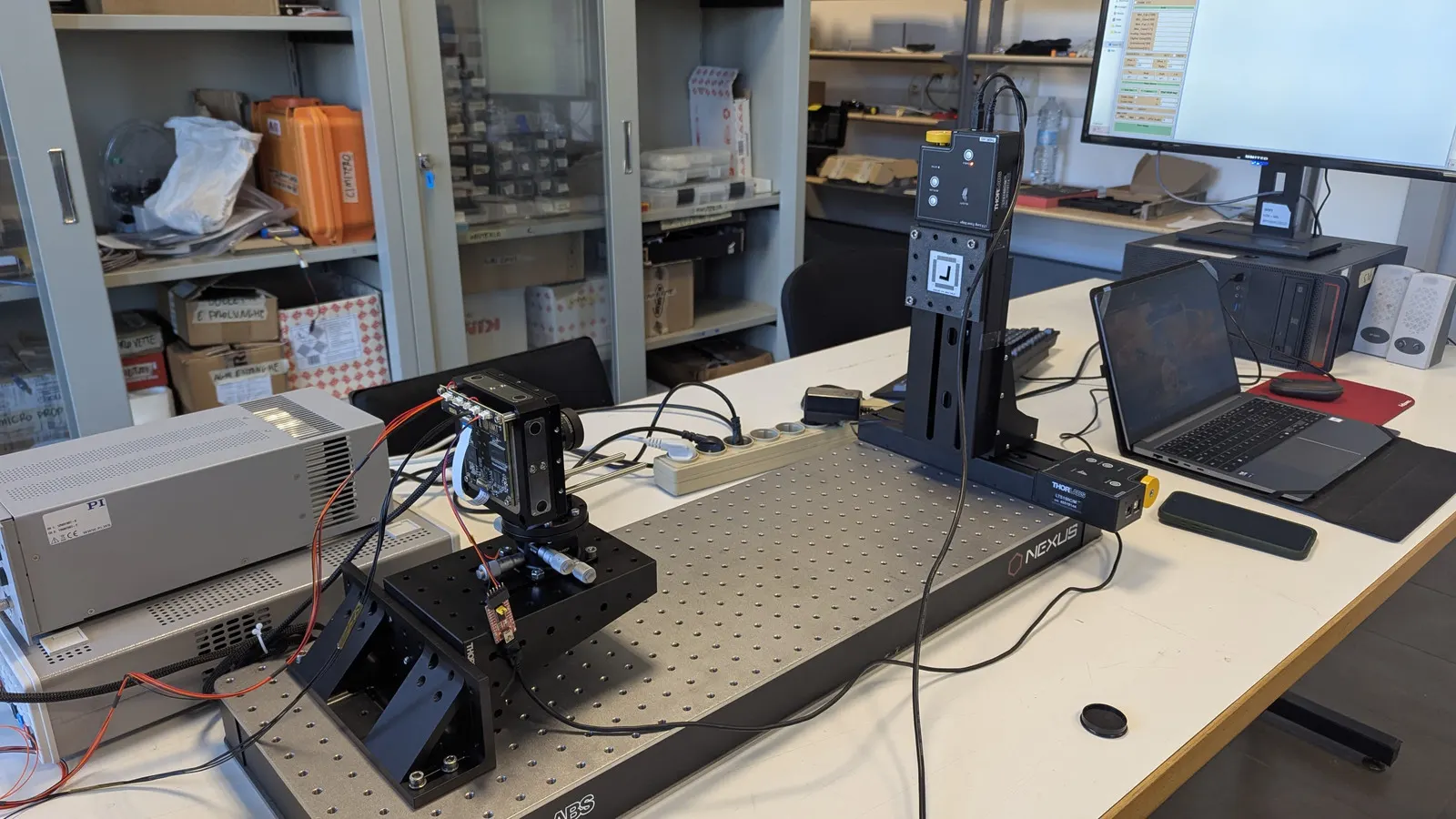
A Forward Motion Compensation prototype: the sensor, not the optics, is translated in antiphase with the apparent motion of the scene.
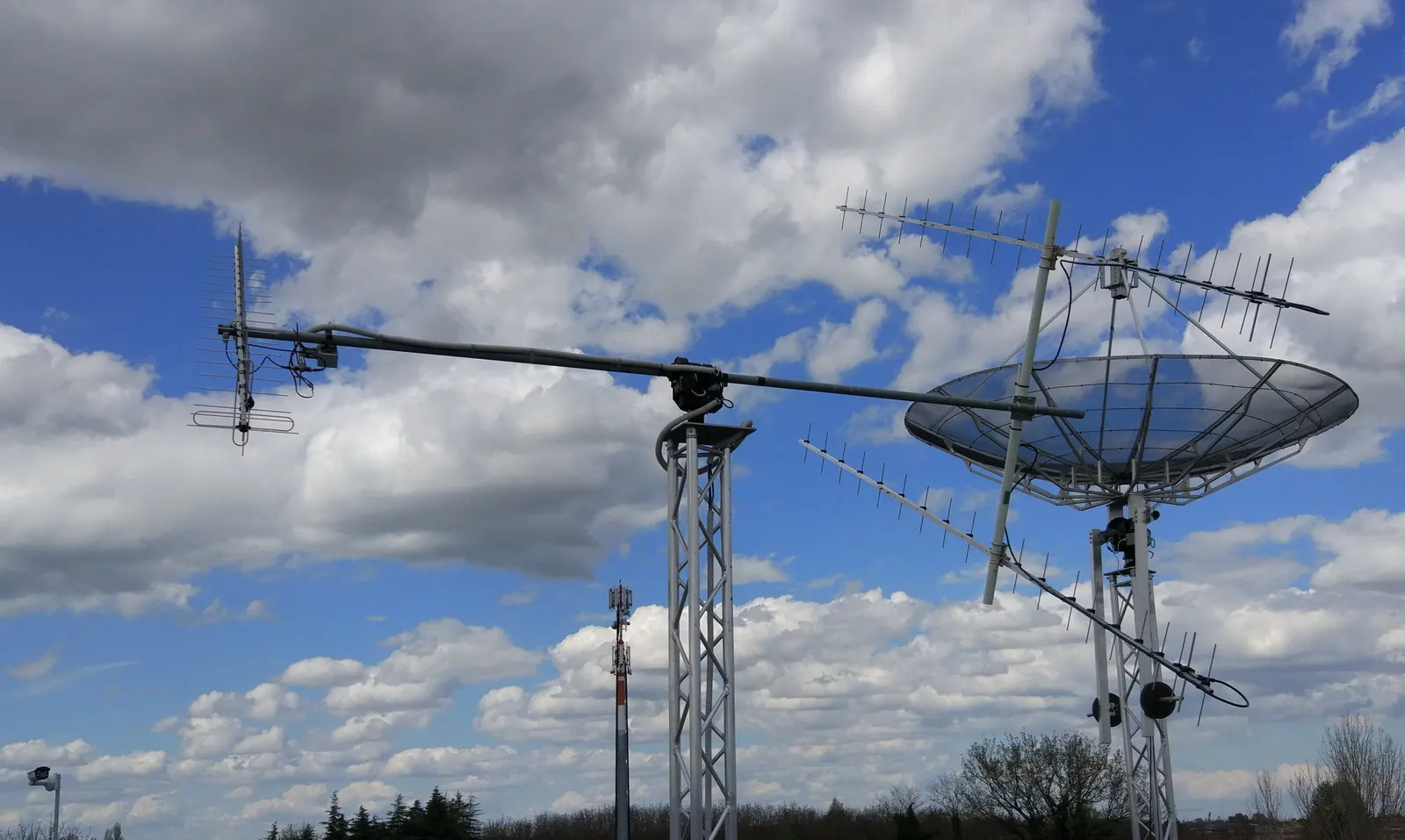
The lab ground station, with a software defined radio transceiver, used for university satellite operations.
Students
The lab supervises curricular internships and bachelor and master theses on its own research lines, with access to the facilities and a supervisor and co-supervisor alongside.
We have worked with